
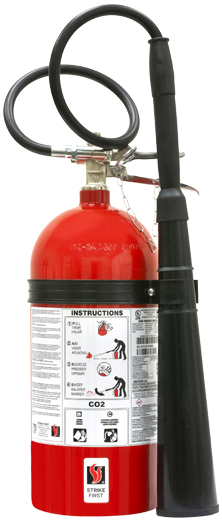
The Strike First CO₂ Carbon Dioxide Fire Extinguisher is designed for fast, clean fire suppression in areas with sensitive electrical equipment and flammable liquids. Because CO₂ leaves no residue, it is ideal for environments where cleanup and equipment protection matter.
Key Features
- Industrial-strength aluminum cylinder
- Corrosion-resistant polyester powder coating
- Stainless steel handles, pull pin, and retaining chain
- Chrome-plated solid brass valve
- Strong impact-resistant discharge horn
- Easy-to-read color-coded labels
- Built for easy servicing and maintenance
- Meets NFPA 10 standards
- D.O.T. approved cylinder
- U.S.C.G. approved with the listed bracket
- Clean agent with no residue after discharge
Fire Classes Covered
This extinguisher is designed for:
- Class B Fires — flammable liquids and gases
- Class C Fires — energized electrical equipment
Common applications include:
- Server rooms
- Electrical panels
- Laboratories
- Manufacturing facilities
- Marine environments
- Commercial kitchens with electrical equipment
Why Choose a CO₂ Carbon Dioxide Fire Extinguisher?
CO₂ extinguishers are commonly used where sensitive electronics or equipment could be damaged by dry chemical residue. They discharge clean carbon dioxide gas that helps smother the fire without leaving powder behind.
Many fire professionals recommend CO₂ extinguishers for computer rooms, electrical equipment, and clean industrial applications because they minimize cleanup and reduce damage to electronics
Available Sizes
- 5 lb. CO₂ Fire Extinguisher | UL/ULC Rating 5-B:C | with Wall / VB Bracket
- 10 lb. CO₂ Fire Extinguisher | UL/ULC Rating 10-B:C | with Wall / VB Bracket
- 15 lb. CO₂ Fire Extinguisher | UL/ULC Rating 10-B:C | with Wall / VB Bracket
- 20 lb. CO₂ Fire Extinguisher | UL/ULC Rating 80-B:C | with Wall Bracket
Classes of Fire Protection
Class A Fires – Ordinary Combustibles
These fires are typically extinguished using water or dry chemical agents that cool and insulate the burning material. Class A fires involve common combustible materials such as:
- Paper
- Wood
- Cloth
- Cardboard
- Trash
Class B Fires – Flammable Liquids & Gases
These fires require extinguishers designed to smother flames and interrupt the fire’s chemical reaction. Class B fires involve flammable and combustible liquids, including:
- Gasoline
- Oil
- Paints
- Solvents
- Grease
Class C Fires – Electrical Equipment
Non-conductive fire extinguishing agents are essential for safely suppressing electrical fires without increasing the risk of electric shock. Class C fires occur in energized electrical equipment, such as:
- Electrical panels
- Wiring
- Computers
- Machinery
- Appliances
Class K Fires – Cooking Oils & Grease
These specialized fire extinguishers are designed to suppress grease fires and quickly prevent re-ignition. Class K fires involve high-temperature cooking oils and grease commonly found in:
- Commercial kitchens
- Restaurants
- Food service facilities
Click here to learn more about choosing a suitable fire extinguisher and fire extinguisher cabinet.
Contact us for more information on fire extinguishers.
*Not Eligible for Free Freight: Customer-approved freight charges before shipment