
Types of Access Doors Explained
Access doors may seem simple. However, choosing the right one can save time, improve maintenance, and help your building stay code compliant.
Different projects need different access panels. For example, a hospital often requires a fire-rated access door. On the other hand, an office renovation may only need a standard drywall access panel.
In this guide, we’ll explain the most common types of access doors used in commercial construction. We’ll also cover where each type works best and what makes each one unique.
What Is an Access Door?
An access door creates an opening in a wall, ceiling, or floor. As a result, maintenance staff can reach plumbing, HVAC equipment, electrical wiring, valves, and other building systems without damaging finished surfaces.
Instead of cutting into drywall every time repairs are needed, technicians simply open the access panel. Therefore, maintenance becomes faster, easier, and much less expensive.
Access doors also help buildings look clean because they hide utilities behind a finished surface.
Why Are Access Doors Used?
Access doors serve one important purpose. They provide safe and convenient access to building systems.
For example, contractors install access doors so maintenance teams can inspect plumbing lines, electrical panels, HVAC equipment, or communication wiring.
In addition, access doors help protect walls and ceilings from unnecessary damage during repairs.
Some models also provide:
- Fire protection
- Security
- Weather resistance
- Sound control
- Architectural appearance
Consequently, access doors appear in almost every commercial building.
Fire-Rated Access Doors
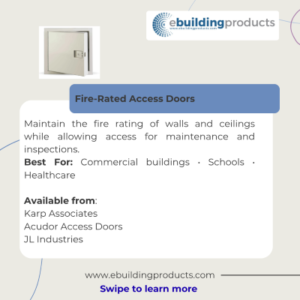
Fire-rated access doors protect fire-rated wall and ceiling assemblies.
Unlike standard access panels, these doors undergo testing to meet UL and other building code requirements. As a result, they help maintain the fire rating of the surrounding assembly.
These products work especially well in:
- Schools
- Hospitals
- Healthcare facilities
- Commercial buildings
- Mechanical rooms
- Stairwells
Popular manufacturers include:
If your wall requires a fire rating, choose a fire-rated access door instead of a standard panel.
Drywall Access Doors
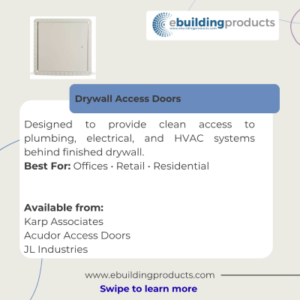
Drywall access doors provide clean, finished access through drywall walls.
Because they install flush with the wall, they blend nicely into finished spaces. Meanwhile, they still allow quick access to plumbing, electrical systems, and HVAC equipment.
These access panels work well for:
- Office buildings
- Retail stores
- Residential projects
- Commercial renovations
Many contractors choose drywall access doors because they offer a professional appearance while remaining easy to install.
Ceiling Access Doors
Many utilities run above suspended or drywall ceilings. Therefore, ceiling access doors make maintenance much easier.
Instead of removing ceiling materials, maintenance teams simply open the access panel.
Ceiling access doors commonly provide access to:
- HVAC systems
- Electrical wiring
- Plumbing
- Fire sprinkler piping
- Communication cables
These products work especially well in schools, hospitals, offices, and commercial buildings.
Plastic Access Doors
Plastic access doors provide an affordable solution for many non-fire-rated applications.
Because plastic resists corrosion, these doors perform well in damp locations. In addition, they install quickly and require very little maintenance.
Plastic access doors are ideal for:
- Bathrooms
- Utility rooms
- Laundry rooms
- Residential buildings
- Moisture-prone spaces
If your project does not require a fire rating, plastic access doors may offer an excellent value.
Recessed Access Doors
Recessed access doors create one of the cleanest finished appearances available.
Unlike standard flush panels, recessed models accept drywall, tile, or other finish materials inside the door itself. Consequently, the access panel almost disappears after installation.
These doors work especially well in:
- Office buildings
- High-end interiors
- Commercial renovations
- New construction
Architects often specify recessed access doors when appearance matters just as much as accessibility.
GFRG Access Doors
Glass Fiber Reinforced Gypsum (GFRG) access doors create a nearly invisible finish.
Because these doors blend directly into drywall ceilings and walls, designers often use them in premium commercial spaces.
GFRG access doors are excellent for:
- Hospitals
- Architectural interiors
- Hotels
- Museums
- Corporate offices
- High-end commercial buildings
Although GFRG doors cost more than standard access panels, they deliver an exceptionally clean appearance.
Which Type of Access Door Should You Choose?

Every project has different requirements.
Before selecting an access door, consider:
- Fire rating requirements
- Wall or ceiling installation
- Material type
- Appearance
- Moisture exposure
- Accessibility
- Building codes
- Maintenance needs
For example, healthcare facilities often require fire-rated access doors. Meanwhile, residential utility rooms may only need a plastic access panel.
Similarly, architects frequently choose recessed or GFRG access doors when aesthetics become a priority.
Choosing the correct product from the beginning helps save time, reduce maintenance costs, and improve long-term building performance.
Find the Right Access Door at eBuildingProducts
Whether you need a fire-rated access door, drywall access panel, ceiling access door, plastic access door, recessed access panel, or GFRG access door, eBuildingProducts offers products from trusted manufacturers.
Our team helps contractors, architects, facility managers, and building owners find the right solution for every application.
Browse our full selection online or contact us if you need help selecting the best access door for your next project.